Across India, cities have traditionally expanded as populations, industries and businesses grew around them.
Dholera is being developed differently.
Dholera Special Investment Region (Dholera SIR) is a large planned industrial and urban development in Gujarat’s Ahmedabad district, approximately 100 km southwest of Ahmedabad and close to the Gulf of Khambhat.
The larger Dholera SIR covers approximately 920 sq km, with about 422 sq km planned for development. Its development falls under the Gujarat Special Investment Region Act, 2009.
What makes Dholera particularly interesting is that much of the infrastructure is being planned before the city reaches its future population and industrial scale.
Roads, utilities, industrial areas, residential zones, digital infrastructure, water systems and connectivity are being developed as parts of one larger plan.
That makes Dholera much more than a conventional real-estate development.
It aims to create an entire economic ecosystem.
Why Was Dholera Created?India’s established metropolitan centres have driven enormous economic growth.
Mumbai developed into a financial centre. Bengaluru became a technology hub. Hyderabad grew around technology and pharmaceuticals. Chennai became a major manufacturing centre, while Delhi-NCR became one of India’s largest economic regions.
But rapid urbanisation creates challenges too.
Congestion increases. Industrial land becomes limited. Housing becomes expensive. Utilities face pressure. Commute times increase, and expanding major industrial facilities inside existing cities becomes increasingly difficult.
The idea behind new economic cities is therefore simple:
Why Was Dholera Created?
Instead of continuously modifying cities that were designed for another era, build new economic centres around the needs of the future.
The Dholera model integrates industrial, commercial, residential and mixed-use zones alongside infrastructure, utilities, green spaces and digital networks.
How Big Is Dholera SIR?
The scale is one of the first things that separates Dholera from a normal township or industrial park.
According to the book’s September 2026 fact summary:
| Total region | Approx. 920 sq km |
| Planned development area | Approx. 422 sq km |
| First-phase Activation Area | Approx. 22.5 sq km |
| Roads & utility networks in Activation Area | Around 72 km |
| Planning target | Around 2 million residents |
| Employment planning target | Around 8 lakh jobs by around 2040 |
These population and employment figures are planning targets rather than guarantees.
That distinction matters when understanding Dholera: this is a long-term urban and economic development project rather than a city expected to emerge overnight.
What Is the Dholera Activation Area?
One of the most important concepts for anyone studying Dholera is the Activation Area.
It represents the first major phase of development and covers approximately 22.5 sq km.
The book records around 72 km of roads and utility networks, along with planned infrastructure including:
- 50 MLD water treatment capacity
- 10 MLD sewage treatment
- 20 MLD effluent treatment
- Integrated road and utility infrastructure
Dholera_Book_Final_Preview
Instead of infrastructure being added after buildings and communities appear, Dholera’s approach is to establish much of the underlying infrastructure first.
Think of it as building the city’s operating system before filling the city with applications.
Ahmedabad–Dholera Expressway
Connectivity is central to Dholera’s development story.
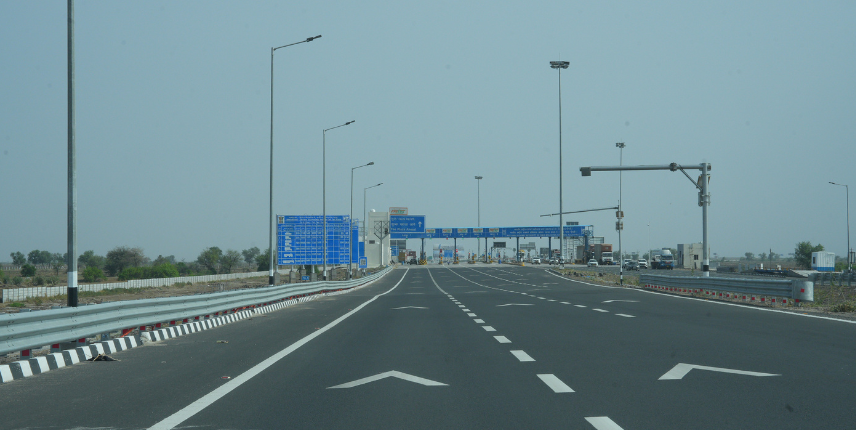
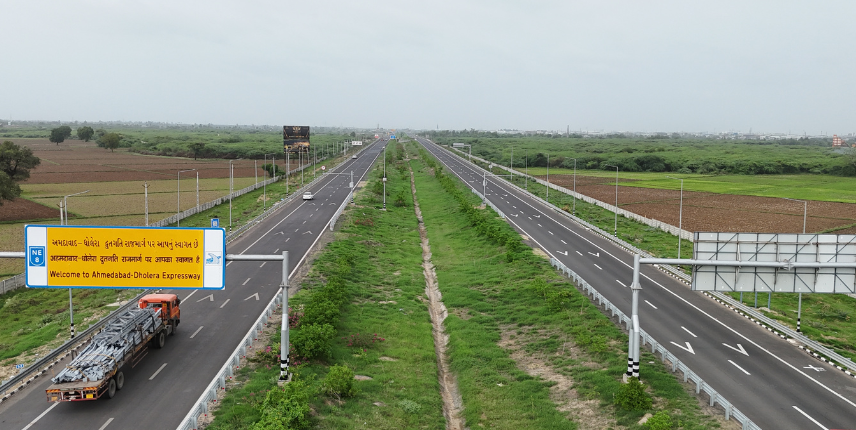
The Ahmedabad–Dholera Expressway is a 109-km access-controlled corridor connecting the region with Ahmedabad. According to the book’s September 2026 information, the expressway was inaugurated in March 2026. Dholera_Book_Final_Preview
Its importance goes beyond travel time.
For an industrial city, transportation infrastructure affects:
- employee mobility;
- supply-chain efficiency;
- movement of goods;
- access to Ahmedabad;
- business connectivity; and
- the attractiveness of the region to industries.
Infrastructure therefore becomes part of Dholera’s economic proposition, rather than simply an amenity.
Dholera International Airport
Another major piece of the connectivity ecosystem is Dholera International Airport.
The book records Phase 1 approval in 2022 at ₹1,305 crore, with operations targeted for late 2026 as of the book’s September 2026 information. Dholera_Book_Final_Preview
Because infrastructure timelines can change, prospective businesses, residents and investors should always verify the latest commissioning status through official sources before making decisions.
Once operational, the airport is intended to strengthen the region’s national and international connectivity and support the broader industrial ecosystem.
Why Are Semiconductors Important for Dholera?
Perhaps the development that has brought the greatest international attention to Dholera is semiconductor manufacturing.
The book identifies the Tata Electronics–PSMC semiconductor fabrication project as a proposed investment of up to approximately ₹91,000 crore, with planned capacity of up to 50,000 wafers per month across the 28–110 nm range.
Commercial production was expected around mid-2028 according to information available when the book was prepared. Dholera_Book_Final_Preview
A semiconductor fabrication plant matters because a major manufacturing facility rarely exists alone.
It can create demand for an entire network of supporting businesses:
Anchor Industry → Suppliers → Logistics → Workforce → Housing → Retail → Services → New Businesses
This ecosystem effect is one of the central ideas behind Dholera.
As the book explains, factories attract suppliers; suppliers create employment; employment creates housing demand; housing supports retail and services; and services attract additional talent and investment. Dholera_Book_Final_Preview
Dholera and Renewable Energy
Future industrial cities will also need significant and increasingly sustainable sources of energy.
Dholera includes a large solar-energy initiative, with the book noting that the first 300 MW had been commissioned by Tata Power as of September 2026. Dholera_Book_Final_Preview
The combination of industrial development, renewable energy, modern utilities and digital infrastructure is part of the broader vision of creating a future-ready economic city.
Is Dholera Only an Industrial City?
No.
Industry may provide an economic foundation, but a functioning city requires much more than factories.
Dholera’s planning considers:
Industry + Housing + Commerce + Education + Healthcare + Recreation + Infrastructure + Technology
The eventual objective is to create communities where people can not only work, but also live, learn, build businesses and raise families.
This is why the Dholera story extends into residential development, education, healthcare, professional services, hospitality and entrepreneurship as the city develops. These themes form an entire section of the book’s opportunity and people chapters. Dholera_Book_Final_Preview
Why Are Businesses Watching Dholera?
Modern companies evaluate locations using several factors.
These can include:
- infrastructure quality;
- reliable utilities;
- connectivity;
- availability of land;
- logistics;
- access to talent;
- regulatory support;
- digital infrastructure; and
- long-term expansion possibilities.
Dholera is being planned around many of these requirements from the beginning.
This is especially relevant as India seeks greater participation in industries such as electronics, semiconductors, renewable energy, data centres, advanced manufacturing and other technology-led sectors.
Is Dholera the Next Dubai or Shenzhen?
You’ll often hear comparisons between Dholera and places such as Shenzhen, Singapore or Dubai.
Those comparisons can help explain what planned economic development can achieve, but they should not be interpreted literally.
Dholera will have its own circumstances, economy and development journey.
The more useful lesson from successful global economic centres is that transformation generally requires a combination of:
Vision → Infrastructure → Connectivity → Industry → Talent → Governance → Long-term Execution
The book itself makes this distinction: Dholera’s future will ultimately depend on its own execution rather than comparisons with other global cities. Dholera_Book_Final_Preview
Is Dholera a Real-Estate Project?
Describing Dholera only as a real-estate project misses much of the bigger picture.
Real estate is one component of the city’s development.
The larger vision involves building an economic ecosystem around:
- manufacturing;
- technology;
- infrastructure;
- logistics;
- renewable energy;
- commerce;
- residential communities;
- services; and
- future employment.
As industries and economic activity grow, demand for residential, commercial and supporting infrastructure may grow alongside them.
But development takes time, and individual land or property investments require independent due diligence.
Dholera Is a Long-Term Story
Perhaps the most important thing to understand about Dholera is its time horizon.
A city of this scale is not built in a few months or years.
Its progress depends upon infrastructure delivery, industrial investment, employment creation, government execution, private-sector participation, talent attraction and the development of communities.
That means anyone studying Dholera should separate three things:
What exists today.
What is currently being built.
What is planned for the future.
Understanding that distinction makes it much easier to evaluate Dholera objectively.
Understanding Dholera with TNT Infra
At TNT Infra, our objective is to help people understand Dholera before making decisions about it.
That means looking beyond promotional claims and understanding the city’s master planning, infrastructure, connectivity, development zones and long-term economic ecosystem.
If you’re exploring Dholera for land, business, future development or investment research, our team can help you understand the region and the available opportunities.
Explore Dholera with clarity. Understand before you invest.